Operating artifacts that make grant risk visible earlier
These proof materials show how Grant Performance Office structures obligations, deadlines, review ownership, reporting assembly, and leadership visibility. Some are reusable methods, some are illustrative demonstrations, and none should be read as a claim of automated delivery without human review.
One proof layer for operators, funders, and reviewers
The first demonstration does not try to simulate an entire organization platform. It proves one operational journey clearly: make risk visible earlier, assemble reporting faster, and keep human review in control.
The prototype and worked example on this page are illustrative proof surfaces. They demonstrate the operating logic behind the diagnostic rather than claim a fully live software product or an automated client delivery engine.
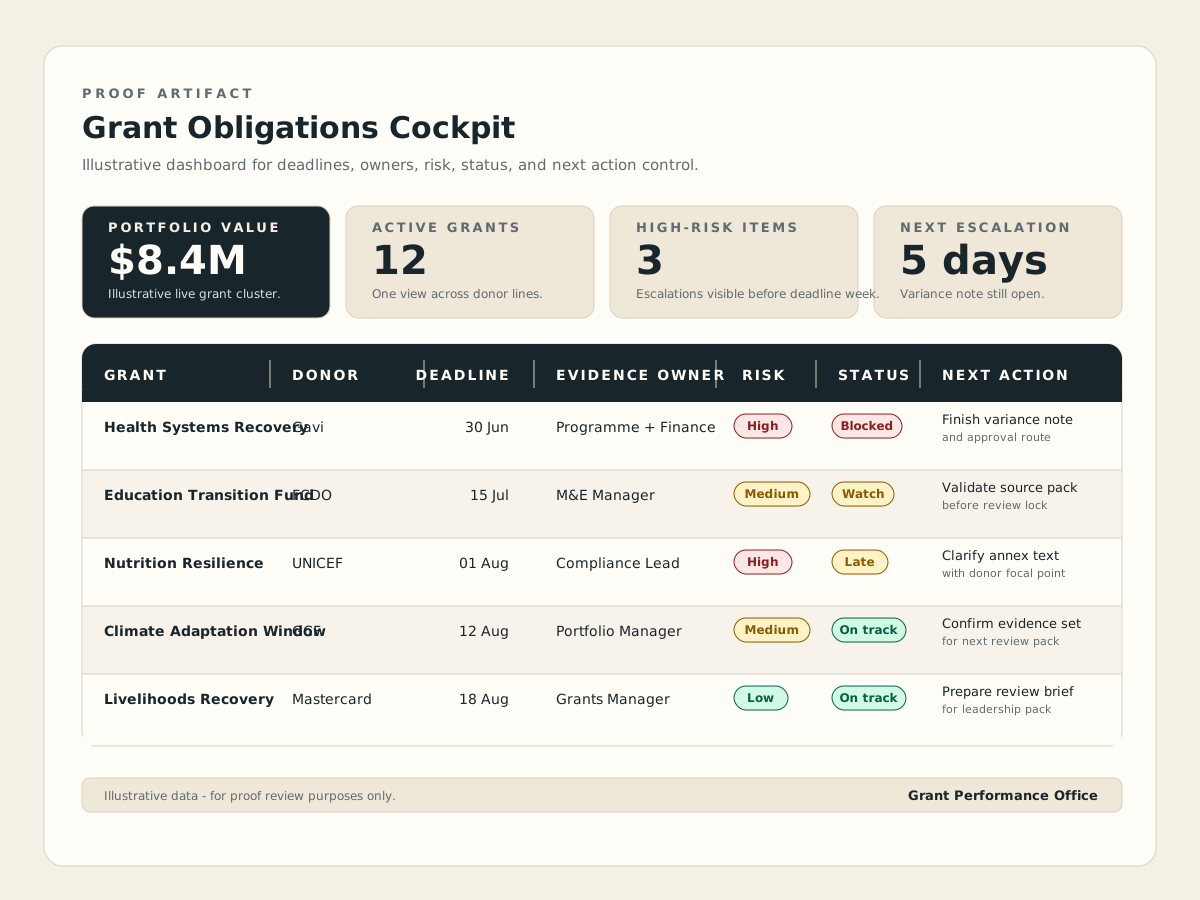
Portfolio Value
$8.4M
Illustrative portfolio in active review.
Active Grants
12
One leadership view across donors and deadlines.
At-Risk Grants
3
Risk is surfaced before the review cycle breaks down.
Next Deadline
5 days
Quarterly report exposed by missing source inputs.
Three situations where the diagnostic logic becomes concrete
These scenarios are illustrative. They show the structure of the work rather than claim published client case studies.
Multi-donor NGO portfolio under quarterly reporting pressure
Situation: Reporting cycles are repeatedly stressful because finance, programme, and grant inputs do not align early enough.
Risk: Leadership sees risk only near the submission window, when correction options are narrower.
Diagnostic action: Map the reporting assembly routine, obligation view, and named review checkpoints.
Stabilization output: A clearer quarterly review pack, obligation matrix, and escalation model.
Local implementer preparing for direct donor funding
Situation: The organization needs stronger documentation discipline and clearer internal ownership before funding complexity increases.
Risk: Control expectations rise faster than the operating model behind them.
Diagnostic action: Examine role clarity, obligation tracking, evidence readiness, and reporting workflow discipline.
Stabilization output: A readiness view that clarifies where the first stabilization effort should sit.
Grant team struggling with late finance and programme inputs
Situation: Reviewers spend time chasing missing files and reconciling conflicting source data under pressure.
Risk: Quality review collapses into last-minute correction and avoidable compliance exposure.
Diagnostic action: Make the handoff sequence, review timing, and evidence dependencies visible.
Stabilization output: A reporting assembly map with earlier control points and named owners.
From source pack to audit-ready draft
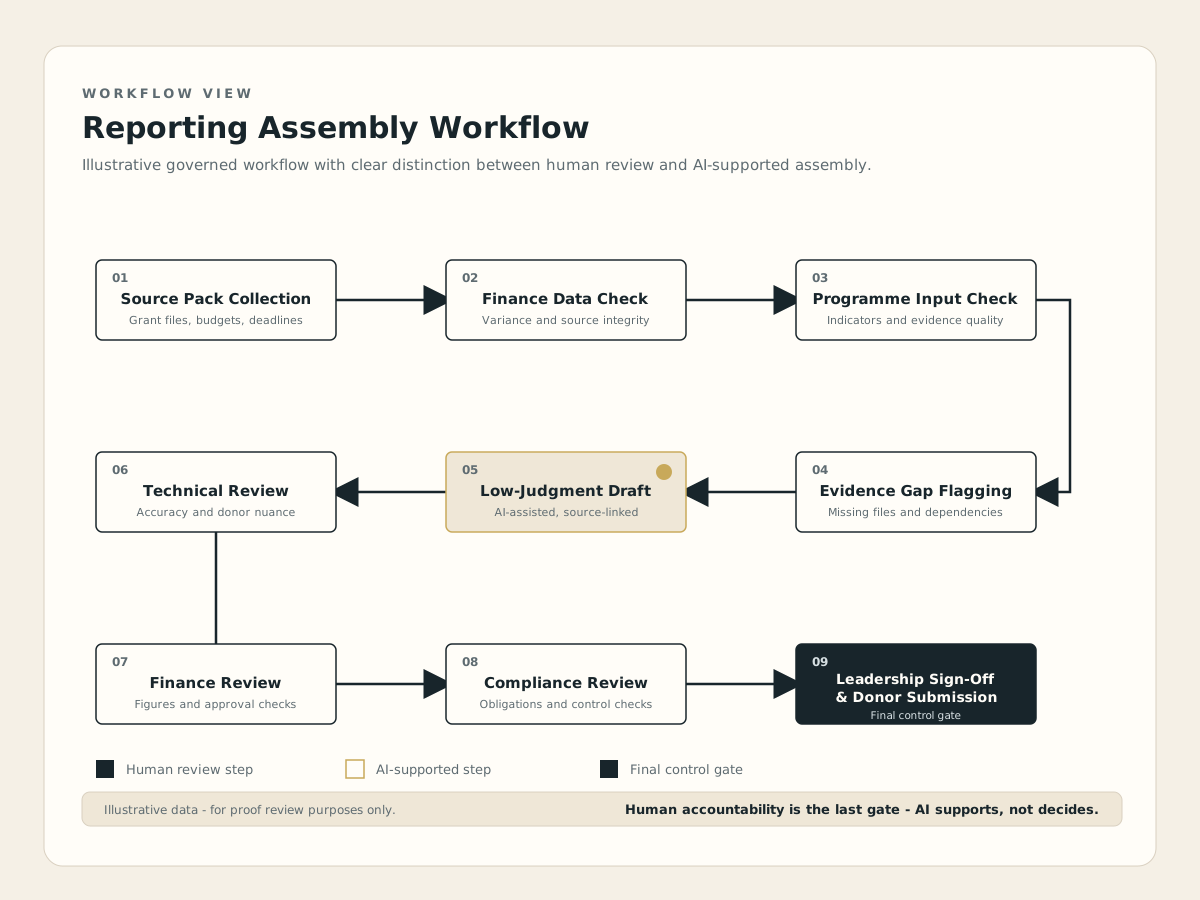
This is the simplest funding-relevant product journey: ingest the operating inputs, detect variance and missing evidence, assemble a draft, and route it through named human review.
Ingest the source pack
Budget files, issue logs, reporting deadlines, and program notes are assembled into one working context.
Flag risks and gaps
The workflow highlights missing inputs, budget variance, and exposed reporting deadlines before drafting begins.
Draft with traceability
AI supports variance explanation and low-judgment narrative assembly with source-linked references.
Route for named review
Technical and finance reviewers approve, correct, or escalate before any external output is finalized.
What changes after the operating layer is installed
This is an illustrative readout structure based on the same logic used in the diagnostic sprint. It shows the shape of the improvement without overstating validated results.
Before
- Quarterly review meetings relied on manually assembled spreadsheets and inbox follow-up.
- Leadership could not see which grants were exposed until deadlines were close.
- Risk discussion focused on symptoms rather than ownership and next action.
Intervention
- Built one portfolio cockpit covering deadlines, burn-rate signals, and overdue actions.
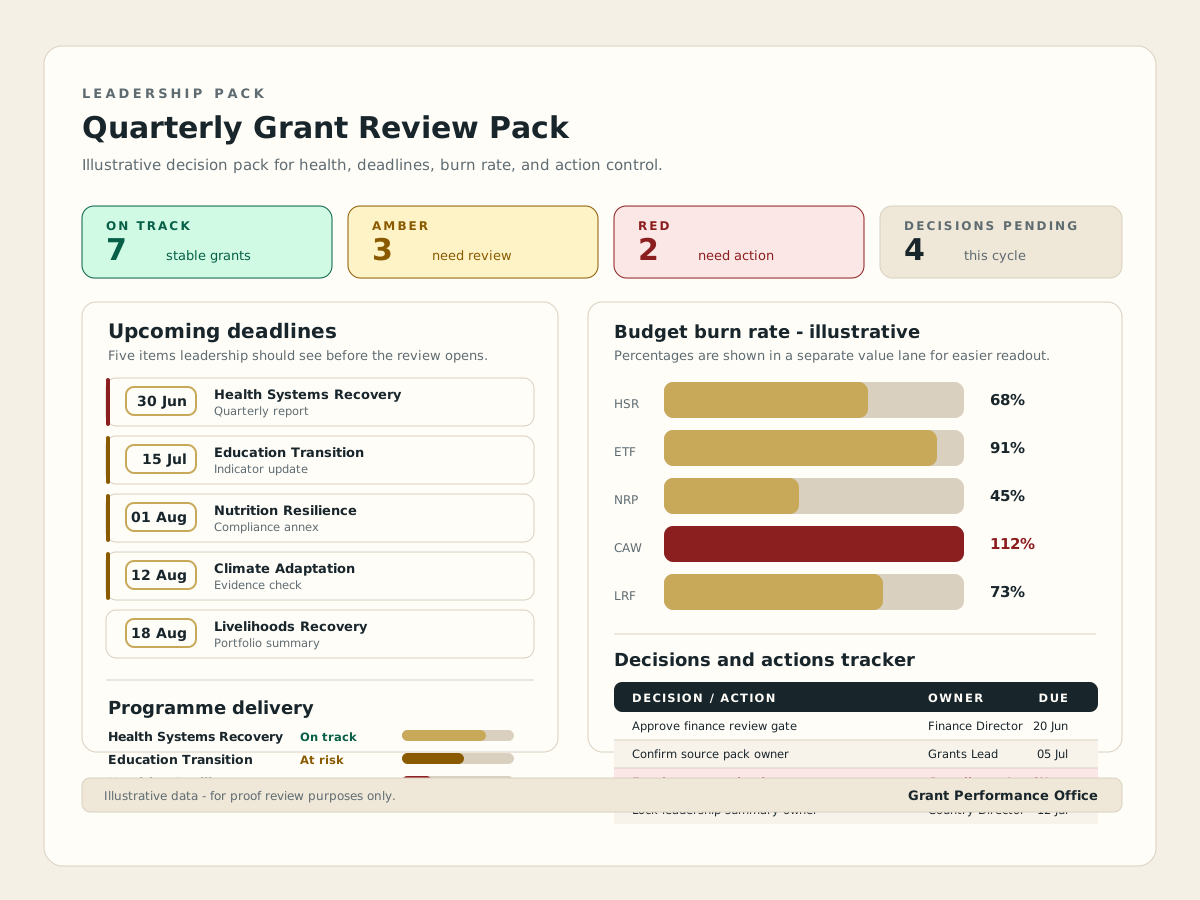
- Standardized the quarterly review pack around one truth set for grants, finance, and program leads.
- Introduced AI-assisted drafting for variance notes under named reviewer control.
After
- Decision reviews shifted from data chasing to intervention planning.
- Exposed reports and missing inputs became visible earlier in the cycle.
- Leadership had one repeatable basis for risk escalation and follow-up.
The Human Factor
Primary Reviewer
Director of Grants / Grants Manager / Finance and operations Leaders / Programme Managers
Control Point
Monthly threshold-based escalation to c-level
Grant Obligations Cockpit
Centralized visibility across diverse donor reporting commitments.
Business Value
Eliminates surprise reporting deadlines and provides leadership with a 'risk-at-a-glance' view of the entire portfolio.
Implementation Log
Working inputs: ERP exports, grant trackers, reviewer notes
Control model: Named human review before any external use
AI Assembly
Data aggregation and obligation mapping.
Human Judgment
Risk weighting and strategic mitigation planning.
The Human Factor
Primary Reviewer
Finance Director & Program Director
Control Point
Signed cross-functional sign-off required for final assembly.
Quarterly Grant Review Pack
The definitive truth-set for grant performance meetings.
Business Value
Standardizes how cross-functional teams discuss performance, moving from finger-pointing to problem-solving.
Implementation Log
Working inputs: ERP exports, grant trackers, reviewer notes
Control model: Named human review before any external use
AI Assembly
Financial variance calculation and data ingestion.
Human Judgment
Programmatic narrative analysis and course-correction logic.
The Human Factor
Primary Reviewer
Technical Lead / Program Manager
Control Point
Mandatory human-in-the-loop review at 50% and 90%.
Reporting Assembly Workflow
Redesigning the 'last mile' of report production using governed AI.
Business Value
Designed to reduce drafting time, increase narrative consistency, and improve adherence to donor-specific terminology under named reviewer control.
Implementation Log
Working inputs: ERP exports, grant trackers, reviewer notes
Control model: Named human review before any external use
AI Assembly
Drafting of low-judgment narrative sections.
Human Judgment
Strategic accuracy, donor nuance, and final accountability.
See these artifacts in context
Use the direct inquiry form to request a founder-led walkthrough of the proof layer and diagnostic fit.
If you are not ready for a walkthrough, start with the Grant Reporting Readiness Checklist to pressure-test obligations, evidence, and review ownership before the next cycle.